
It feels like it’s time to share how things are going in the world of assessment at the University of the Built Environment since my 2025 post Enhancing the assessment experience. Exploring a wider range of assessment types was one of the outcomes of the Assessment Steering Group in 2024. This action aims to enhance the assessment experience both from an internal perspective (marking and managing assessment) and from a student perspective (variety, authenticity and workload). While the most common assessment type remains coursework, three ‘new’ types have become more popular over the last 12–18 months: computer-based assessment (CBA), portfolio and practical. This blog post will explore each of these assessment types in turn.
Computer-based assessment (CBA)
It’s worth making the point, before going any further, that all assessment at the University of the Built Environment is online, it’s all digital, it’s all computer-based. Even the more ‘standard’ assessment requires students to study online, prepare their coursework digitally and submit it through the VLE.
It’s also worth making the point that we have been using what we call computer-marked assessment (CMA) at the University of the Built Environment for over 10 years now, so that is not new. CMA comprises multiple choice questions, as well as ordering, numerical and (single) word answers. As the name suggests, CMA is marked automatically ‘by the computer’. In contrast to CMA, the new approach CBA is largely tutor-marked.
So, what is this new type of assessment ‘CBA’? This is a good question. Working with academic colleagues, I and my Digital Learning Quality Control colleagues, Adrian and Sarah, have been piloting and developing the concept of CBA, and have recently carried out a review.
In contrast to uploading a finished file to Turnitin for coursework, the overarching concept of CBA is that students work directly in the assessment platform (online) over a period of time and within a specified window. The thinking behind this is to encourage students to ‘chip away’ at their assessment tasks as they work through the module, making use of what they learn week by week. Students can enter the assessment platform, upload files or make notes online, save, then add to them the next time they go in.
On our Quantity Surveying programme, for example, the CBA lends itself well to students entering calculations directly into the system and then typing in a longer narrative (or uploading a file with the narrative) explaining how they reached their calculation. In our new Level 4 modules which straddle multiple programmes we ask students to write short answers in the system.
What we have established through the pilots and review is that there has been some cross-over with portfolio assessment (which I’ll come on to next). However, a distinction can now be made. We have found that CBA works better when it is not a single 100% weighted assignment. It also works well when the subject requires students to enter ‘quick’ responses such as calculations supported by brief narrative (rather than just lengthy narrative).
Portfolio
While portfolio assessment is not new to the University of the Built Environment, we no longer have a bespoke portfolio assessment platform. Personally, I don’t think this is a major problem. From my own research into portfolio assessment when I worked at the Open University and from my own experience using portfolio assessment as an online Masters student several years ago, I believe the digital tool is not particularly important. Instead, the main focus should be on helping students with the concept of reflection and developing evidence of their learning. This is supported by a more recent publication, Getting started with e-portfolios (Jisc 2021).
At the University of the Built Environment, we have previously encouraged students to reflect. This is not new. What is different perhaps is that as part of ‘portfolio’ assessment, we’re making reflective learning more structured. To support this, my colleague, Sarah, and I have created study skills resources to help students with reflective writing at both undergraduate and postgraduate levels.
Pulling evidence, reflection and digital tool together then is what we’ve been implementing with portfolio assessment over the last 18 months or so. A module with portfolio assessment asks students to upload files (their evidence) and type directly into the online system (their reflection). Students are guided to develop their evidence and reflections as they work through the module. Students can go in and out of the platform multiple times, adding or editing and saving each time.
So, while there are some similarities between portfolio and CBA (students work directly online in the system, can dip in and out to develop their response over several weeks), there are also key differences. Portfolio assessment should to be viewed as a bigger piece of work, planned at programme level and built in to modules at relevant points with 100% weighting. As my colleagues at the University of the Built Environment know, I’m not convinced we’re quite there yet with portfolio assessment, but we are making steps in the right direction. Maybe I’ll pick up my previous research into this, and revisit the concept of portfolio and reflection in a separate post.
Practical
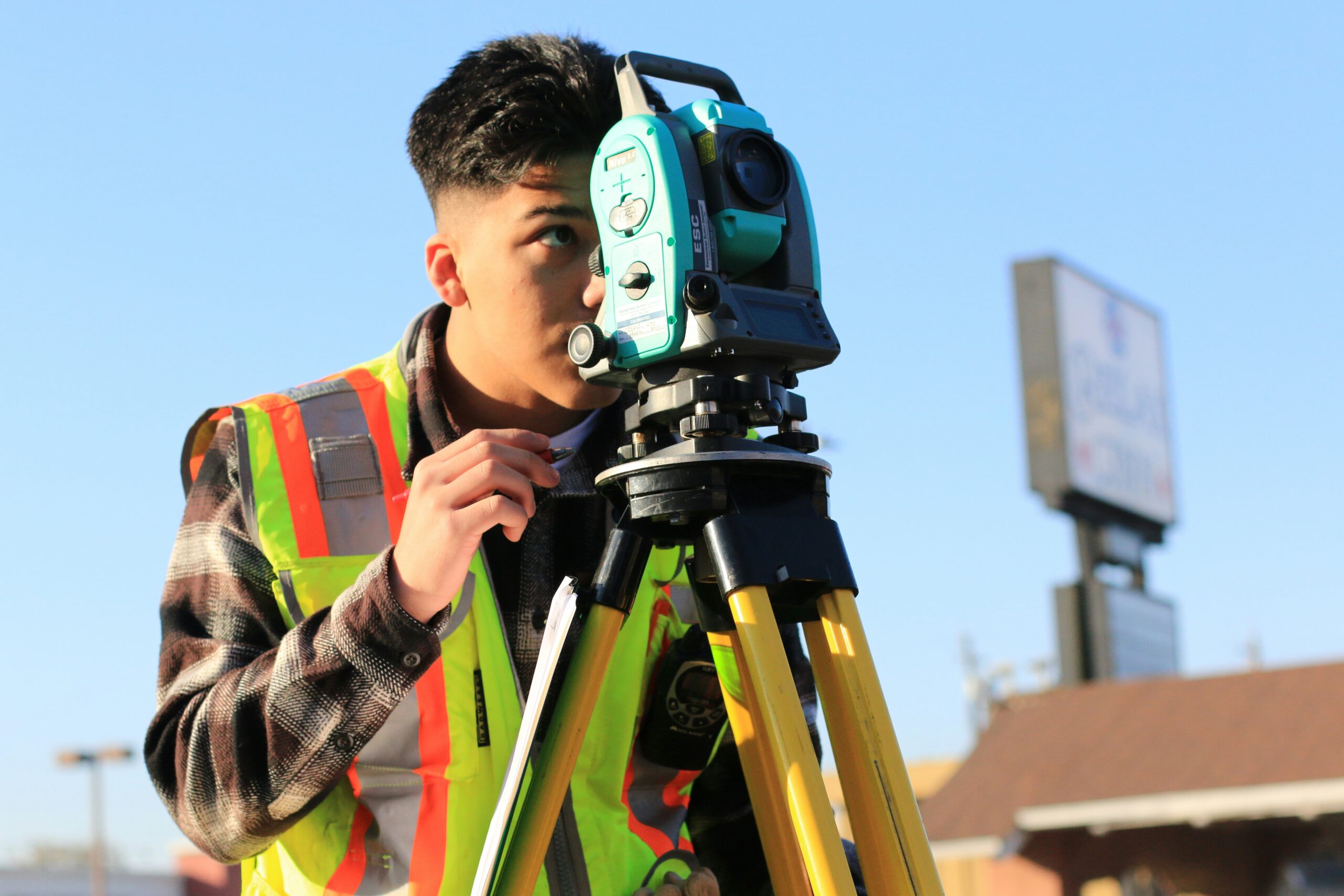
The final assessment type we’ve seen more instances of over the last 18 months or so is ‘practical’. This does what is says on the tin… This is where students do something relevant for built environment professions rather than write an academic piece. For our students studying construction, real estate, architecture and design, etc. they produce, for example, a take-off, a poster or perhaps a presentation.
Again, the concept of doing an authentic and industry-relevant task for module assessment is not new for the University. This kind of assessment has been in place for a long time. What is different since the Assessment Steering Group work, however, is the increased awareness of word count equivalence. Word count is generally used in Higher Education to determine student effort in assessment. However, QAA states that assessment should be manageable and recommends that:
‘Assessment requirements take into account the notional learning hours for any given unit of study’ (QAA 2018).
In the case of practical assessment, where the focus shifts from writing to calculating or drawing or presenting, for example, word count becomes a less effective means for estimating student workload. This is captured in the following extract from our Assessment load model.
‘In developing an assessment load model, word count/word count equivalence are viewed as indicative of student workload in preparation and production of assessment, it is recognised that summative assessment will vary across assessment categories and methods; and by subject, discipline, level of study; and that individual students work at different rates.’ (UCEM 2024)
Final thoughts
It’s still early days. We need more modules to move through the delivery cycle so we can carry on reviewing and building on the experiences.
We are continuing to add to our guidance for academic colleagues who write assessment and/or develop modules with new assessment types. We will continue to enhance guidance available for students about CBA, portfolio and practical assessment.
We have consulted students previously. We will aim to consult further and involve them in shaping their own assessment.
References
Jisc (2021) ‘Getting started with e-portfolios’, Guides [online]. Available at: www.jisc.ac.uk/guides/getting-started-with-e-portfolios (accessed 26 May 2026).
The Quality Assurance Agency for Higher Education (2018) UK Quality Code for Higher Education, Advice and Guidance: Assessment [online]. Available at: www.qaa.ac.uk/the-quality-code/2018/advice-and-guidance-18/assessment (accessed (25 June 2026).
University College of Estate Management (2024) Assessment Strategy: Assessment Load Model [internal document].
Note: University of the Built Environment was formerly University College of Estate Management.
Acknowledgement
Photo by Scott Blake on Unsplash

Sue Lowe | SCMALT, SFHEA | I’m Quality Controller (Digital Education) at the University College of Estate Management. I worked previously at the Open University and studied – online and at a distance – for a Masters in Online & Distance Education.